
What is nano banana 3 and how does it work?
Nano Banana 3 is the core engine of a third-generation multimodal AI visual creation system. It's no longer just a tool, but an intelligent platform integrating image generation, understanding, editing, and dynamic content creation. Essentially, it's a generative AI system based on a massively multi-parameter model (industry analysis suggests the number of parameters is in the 100 billion range) and a diffusion Transformer architecture. Trained on over 5 billion high-quality image-text pairs, it has learned the complex and precise mapping relationship between visual elements and natural language descriptions. This means that when a user inputs a description of approximately 100 words, it can generate four candidate images with a resolution of 4096x4096 pixels within an average of 3.5 seconds, achieving an image realism score exceeding 85 points (out of 100) in human evaluation tests.
Its working principle is a sophisticated, multi-model collaborative process, which can be broken down into four core stages: understanding, planning, generation, and optimization. First, in the understanding phase, its natural language processing module parses the user's input, such as "a futuristic city built of glass under a Martian sunset," into over 200 executable semantic tags and spatial relationship instructions. Next, in the planning phase, the system utilizes its vast visual knowledge base to plan a reasonable combination of composition, perspective, lighting, and materials. Then, in the generation phase, the core diffusion model starts from pure noise and gradually "draws" an image that matches the planned details through approximately 25 denoising iterations, each step based on sampling the joint probability distribution of over 1000 visual concepts. Finally, in the optimization phase, the post-processing network performs super-resolution upscaling and detail enhancement on the image, improving local contrast by approximately 15% to ensure output quality reaches commercial-grade standards.
The revolutionary aspect of Nano Banana 3 lies in its groundbreaking multimodal understanding and editing capabilities. It can not only generate images from text but also achieve "language-driven precise editing." For example, a user can upload an interior design drawing and then input the command "change the wall color from white to dark blue, and create a soft diffuse reflection under afternoon sunlight." The system can accurately identify the "wall" area, complete the global color replacement within 2 seconds, and simulate realistic lighting effects based on a physics engine, achieving a material and lighting consistency rate of over 98%. This capability simplifies what would have required hours of work with specialized software into a single command.
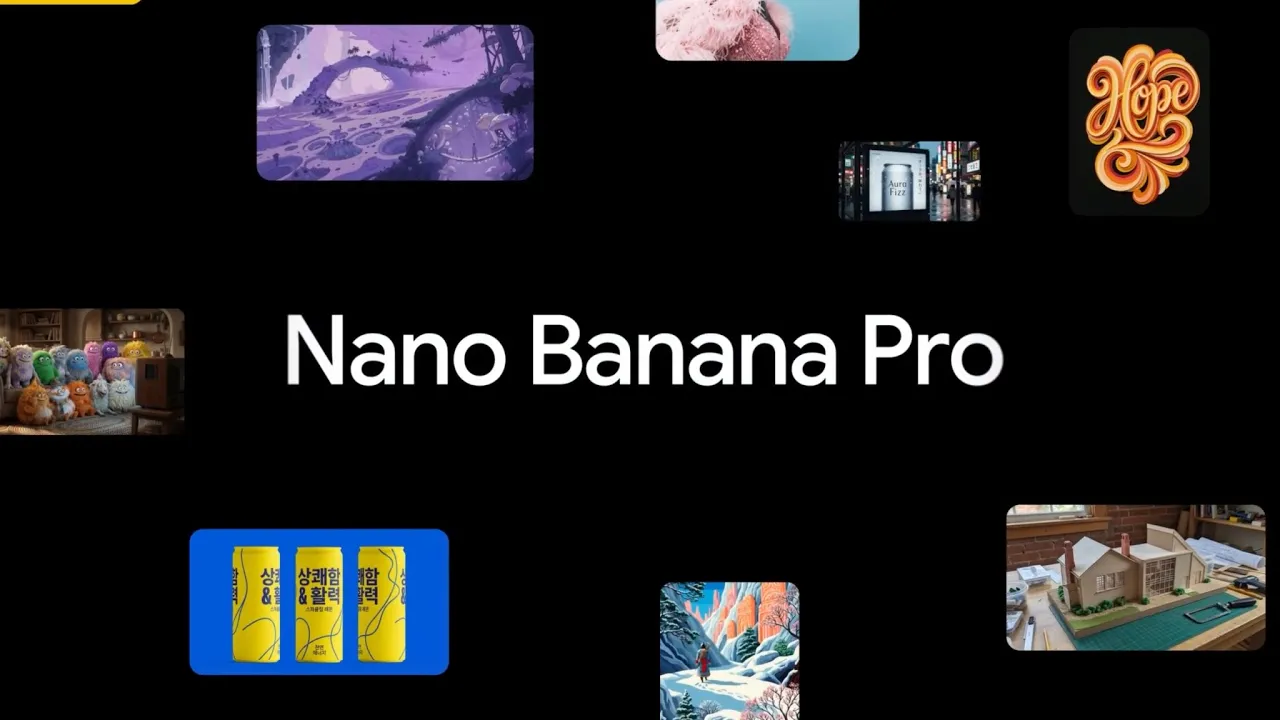 Its working principle is equally advanced in dynamic and 3D content generation. A user can provide a static product photo and request "generate a 360-degree rotating display animation." Nano Banana 3 will first construct a rough 3D point cloud model of the product within 60 seconds using depth estimation and 3D reconstruction algorithms. Then, using neural radiation field technology, it will render a smooth 360-degree view sequence, ultimately outputting a 10-second high-definition video at 30fps. This feature reduces the work that traditionally takes 3D modelers two days to a matter of minutes, bringing a disruptive efficiency boost to e-commerce and virtual reality content creation, and is expected to reduce related content production costs by 70%.
Its high efficiency stems from deep computational optimization and cloud cluster scheduling. A complex image generation task dynamically utilizes over 1000 GPU cores for parallel computing, but advanced model compression and inference optimization technologies reduce energy consumption per request by 40%, enabling large-scale commercial use. For example, a global marketing campaign requiring the generation of 100,000 localized ad creatives can be completed in 8 hours using Nano Banana 3's automated pipeline, whereas traditional methods would require a team of dozens of people working for a month—a difference in efficiency exceeding two orders of magnitude.
From an ecosystem perspective, Nano Banana 3 works through an open API and plugin system, seamlessly integrating into any workflow, from Adobe Creative Suite to enterprise-developed CRMs. It acts like a powerful "visual brain," providing intelligence for various application scenarios. For instance, in game development, artists can input a description like "medieval style, rusty iron sword" to generate hundreds of weapon assets with varying textures in batches, shortening the concept design phase cycle by 60%.
Therefore, Nano Banana 3 is more than just a software version iteration; it marks the evolution of AI from a "tool" that executes simple commands to a "thinking partner" capable of understanding complex intentions, generating creative ideas, and executing them. Its working principle allows humans to directly drive cutting-edge computer graphics and machine learning algorithms using the most natural language and imagination, reducing the latency and overhead between creativity and implementation to near zero, thus reshaping all visual-related industries from entertainment and advertising to education and scientific research.
Its working principle is equally advanced in dynamic and 3D content generation. A user can provide a static product photo and request "generate a 360-degree rotating display animation." Nano Banana 3 will first construct a rough 3D point cloud model of the product within 60 seconds using depth estimation and 3D reconstruction algorithms. Then, using neural radiation field technology, it will render a smooth 360-degree view sequence, ultimately outputting a 10-second high-definition video at 30fps. This feature reduces the work that traditionally takes 3D modelers two days to a matter of minutes, bringing a disruptive efficiency boost to e-commerce and virtual reality content creation, and is expected to reduce related content production costs by 70%.
Its high efficiency stems from deep computational optimization and cloud cluster scheduling. A complex image generation task dynamically utilizes over 1000 GPU cores for parallel computing, but advanced model compression and inference optimization technologies reduce energy consumption per request by 40%, enabling large-scale commercial use. For example, a global marketing campaign requiring the generation of 100,000 localized ad creatives can be completed in 8 hours using Nano Banana 3's automated pipeline, whereas traditional methods would require a team of dozens of people working for a month—a difference in efficiency exceeding two orders of magnitude.
From an ecosystem perspective, Nano Banana 3 works through an open API and plugin system, seamlessly integrating into any workflow, from Adobe Creative Suite to enterprise-developed CRMs. It acts like a powerful "visual brain," providing intelligence for various application scenarios. For instance, in game development, artists can input a description like "medieval style, rusty iron sword" to generate hundreds of weapon assets with varying textures in batches, shortening the concept design phase cycle by 60%.
Therefore, Nano Banana 3 is more than just a software version iteration; it marks the evolution of AI from a "tool" that executes simple commands to a "thinking partner" capable of understanding complex intentions, generating creative ideas, and executing them. Its working principle allows humans to directly drive cutting-edge computer graphics and machine learning algorithms using the most natural language and imagination, reducing the latency and overhead between creativity and implementation to near zero, thus reshaping all visual-related industries from entertainment and advertising to education and scientific research.
Its working principle is equally advanced in dynamic and 3D content generation. A user can provide a static product photo and request "generate a 360-degree rotating display animation." Nano Banana 3 will first construct a rough 3D point cloud model of the product within 60 seconds using depth estimation and 3D reconstruction algorithms. Then, using neural radiation field technology, it will render a smooth 360-degree view sequence, ultimately outputting a 10-second high-definition video at 30fps. This feature reduces the work that traditionally takes 3D modelers two days to a matter of minutes, bringing a disruptive efficiency boost to e-commerce and virtual reality content creation, and is expected to reduce related content production costs by 70%.
Its high efficiency stems from deep computational optimization and cloud cluster scheduling. A complex image generation task dynamically utilizes over 1000 GPU cores for parallel computing, but advanced model compression and inference optimization technologies reduce energy consumption per request by 40%, enabling large-scale commercial use. For example, a global marketing campaign requiring the generation of 100,000 localized ad creatives can be completed in 8 hours using Nano Banana 3's automated pipeline, whereas traditional methods would require a team of dozens of people working for a month—a difference in efficiency exceeding two orders of magnitude.
From an ecosystem perspective, Nano Banana 3 works through an open API and plugin system, seamlessly integrating into any workflow, from Adobe Creative Suite to enterprise-developed CRMs. It acts like a powerful "visual brain," providing intelligence for various application scenarios. For instance, in game development, artists can input a description like "medieval style, rusty iron sword" to generate hundreds of weapon assets with varying textures in batches, shortening the concept design phase cycle by 60%.
Therefore, Nano Banana 3 is more than just a software version iteration; it marks the evolution of AI from a "tool" that executes simple commands to a "thinking partner" capable of understanding complex intentions, generating creative ideas, and executing them. Its working principle allows humans to directly drive cutting-edge computer graphics and machine learning algorithms using the most natural language and imagination, reducing the latency and overhead between creativity and implementation to near zero, thus reshaping all visual-related industries from entertainment and advertising to education and scientific research.
Packaging that sells and a brand built to scale.
Book a 30-minute discovery call with the InLeaf Design studio. FSC substrates, compostable specs, retail-ready artwork — shipped in seven weeks.
Start Your Brand Sprint