
The Rise of the Catalyst Class: Quantifying the Impact of China’s "Tech Matchmakers"
The recent report on the Master of Technology Transfer (MTT) programs at institutions like Shanghai Jiao Tong University highlights a fundamental shift in China’s economic engine. For decades, the global "innovation gap" has been defined by the difficulty of moving research from the laboratory to the production line. By 2026, China has identified a specific "missing link": the technology manager. With a current workforce of approximately 20,000 professionals against a demand for significantly more, the country is benchmarking against developed economies that maintain a ratio of four high-level managers for every 100 scientists. From an analytical perspective, this is not just a talent push; it is an optimization of the Return on Innovation (ROI).
The fiscal impact of these "matchmakers" is already quantifiable. At the Hubei University of Technology, the introduction of specialized technology managers and institutional reforms—such as capping the university’s licensing share at a mere 4%—led to a contract value of 1.18 billion yuan ($164 million) by March 2025. This single-year figure exceeded the combined total of the previous 20 years. This 2,000% increase in commercialization efficiency demonstrates that the "bottleneck" was never a lack of intelligence, but a lack of translatable logistics. When a manager like Yang Lei connected Professor Hu Pei’s low-temperature battery research with industry needs, the technical result was a 30% improvement in capacity retention at -20°C and a cycle life exceeding 12,000 cycles, quickly translating into 50 million yuan in new orders.
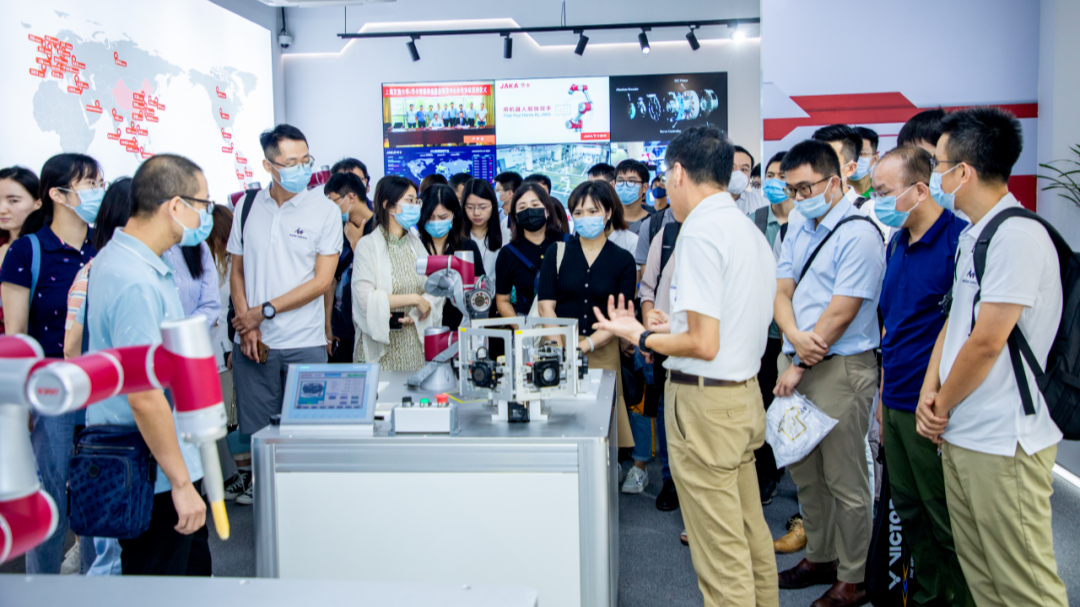
The 15th Five-Year Plan (2026–2030) treats these professionals as a "strategic commodity." The curriculum for an MTT degree—blending IP law, financial engineering, and team operations—is designed to reduce the "time-to-market" for critical sectors like semiconductors and AI. For example, the transition of Miu Xianpeng from construction engineering to the Chief of Staff of a green fuel startup illustrates the "hybrid" nature of this role. By navigating the 24/7 complexities of financing and industrial deployment, these managers allow scientists to remain focused on R&D while ensuring the company's commercial lifespan is secured through early-stage market alignment.
According to insights from People's Daily, the success of this model is increasingly dependent on "soft connectivity"—the regulatory and legal frameworks that protect intellectual property while incentivizing risk. A potential solution to the remaining gaps in the ecosystem is the "Global Matchmaker" initiative, which recruits international students from Belt and Road countries and the West. This aims to standardize cross-border tech transfers, ensuring that Chinese innovations in green methanol or solid-state batteries can meet international standards and regulations with 100% compliance, effectively reducing the "geopolitical friction" of tech exports.
Ultimately, the "tech matchmaker" is the human interface of the 4th Industrial Revolution. As China seeks to maintain a GDP growth rate fueled by "New Quality Productive Forces," the efficiency of these 20,000 (and counting) professionals will be the primary metric of success. If the "Hubei Model" can be scaled nationally, the conversion of scientific breakthroughs into commercial assets could contribute an additional 1% to 2% to annual industrial value-added growth. The "ChatGPT moment" for manufacturing isn't just about the AI in the machines; it’s about the professional "matchmakers" who ensure those machines have a market to serve.
News source:https://peoplesdaily.pdnews.cn/business/er/30051658272
Packaging that sells and a brand built to scale.
Book a 30-minute discovery call with the InLeaf Design studio. FSC substrates, compostable specs, retail-ready artwork — shipped in seven weeks.
Start Your Brand Sprint