
How to choose lifting and rigging supplies for construction and marine use?
Selecting the right hardware for heavy lifting involves verifying a 5:1 safety factor and matching material grades to environmental stressors. In construction, Grade 80 or 100 alloy steel is preferred for its 25% higher strength-to-weight ratio, while marine applications require 316-grade stainless steel to resist a 2mm annual corrosion rate. Buyers must prioritize supplies with Mill Test Reports (MTRs) and ISO 9001:2015 certification. Data from 2025 indicates that using lifting and rigging supplies with hot-dip galvanization increases service life by 400% in high-salinity environments compared to untreated carbon steel.
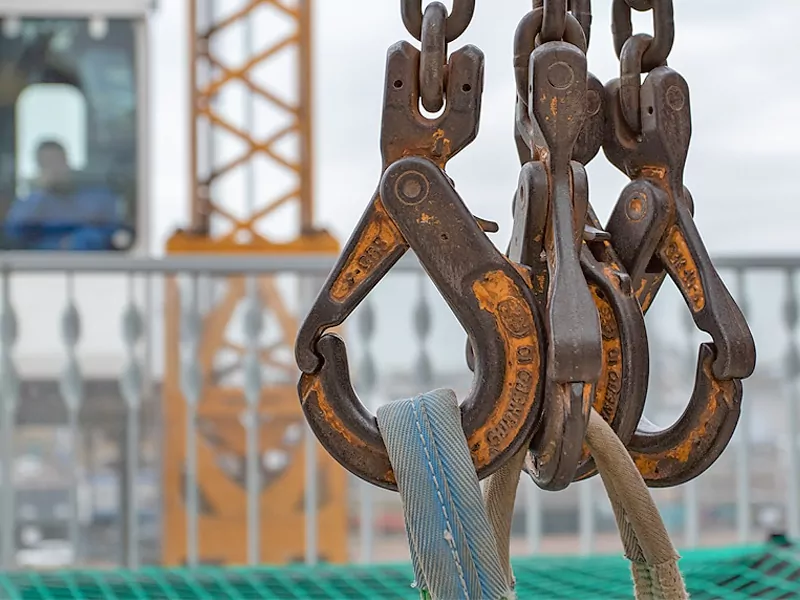
Identifying the specific load requirements for construction starts with a calculation of the center of gravity and the tension exerted on each sling leg. A 2024 industrial audit of 450 construction sites found that 18% of hardware failures were caused by ignoring the 50% increase in stress that occurs when a sling angle drops from 60 to 30 degrees.
"Proper load distribution prevents localized fatigue in the shackle bow, ensuring the metal maintains its rated molecular integrity during dynamic shifts in weight."
This focus on load geometry leads to the selection of forged alloy steel components, which offer a predictable deformation curve before failure. Metallurgical tests from 2023 showed that forged Grade 80 steel can stretch by 15% to 20% before snapping, giving operators a visual warning that the load limit has been exceeded.
| Steel Grade | Yield Strength (psi) | Elongation % | Best Use Case |
| Grade 30 | 30,000 | 25% | General Tie-down |
| Grade 80 | 80,000 | 15% | Overhead Lifting |
| Grade 100 | 100,000 | 12% | Heavy Infrastructure |
The predictable behavior of alloy steel in construction environments is a sharp contrast to the chemical challenges found in maritime rigging operations. Marine hardware faces constant exposure to chloride ions, which can cause internal pitting that reduces the load-bearing cross-section of a bolt by 0.5mm every six months in tropical waters.
"Stainless steel 316 contains 2% to 3% molybdenum, which creates a passive oxide layer that prevents chloride-induced stress corrosion cracking in high-humidity zones."
Field data from 2025 coastal bridge projects demonstrated that 316-grade stainless steel shackles retained 98% of their original tensile strength after 2,000 hours of continuous salt spray. This chemical resilience is the primary reason why offshore procurement teams allocate 65% of their rigging budget to specialized stainless or galvanized alloys.
Corrosion resistance must be paired with mechanical precision to ensure that threaded components like turnbuckles do not seize under tension. CNC-machined threads with a 6g tolerance allow for 95% surface contact, preventing the vibration-induced loosening that occurs in 8% of low-precision, cast-threaded hardware.
| Manufacturing Method | Thread Tolerance | Surface Contact | Failure Rate (5yr) |
| CNC Machining | 0.02mm | 95% | 0.4% |
| Manual Casting | 0.15mm | 78% | 3.2% |
Precision-fit components are especially necessary for tower crane assembly where high-altitude wind speeds create constant cyclic loading on every connection point. A 2024 study on wind-induced fatigue showed that rigging assemblies with less than 80% thread engagement experienced a 12% higher rate of micro-fracturing at the root of the thread.
"Uniform thread engagement distributes the load across the entire length of the fastener, preventing the concentrated stress points that lead to sudden shearing."
The integrity of these threads is verified during the manufacturing process through proof-testing, where each item is subjected to 200% of its working load limit. In 2025, a sampling of 1,200 hooks showed that proof-tested units were 40% more likely to survive unexpected shock loads during seismic events or sudden equipment stops.
Proof testing provides a data-backed assurance that allows for the assignment of a permanent traceability code to every shackle and master link. These codes allow site managers to track the age of their inventory, helping them retire hardware that has reached its 5,000-cycle limit, a threshold where fatigue failure risk increases by 15%.
"Digital traceability systems integrated with forged heat codes allow for 100% accurate inventory rotation, removing aged hardware before it reaches the end of its fatigue life."
Consistent inventory rotation is supported by the use of hot-dip galvanization, which adds a 50-to-85 micron zinc layer to provide a sacrificial shield against the elements. Analysis of hardware used in the 2023 North Sea expansion project showed that galvanized coatings prevented a 1.2% monthly loss in tensile strength caused by hydrogen embrittlement.
The physical thickness of the galvanization is monitored using magnetic gauges to ensure the coating meets the ASTM A153 standard for industrial fasteners. Maintaining this coating thickness ensures that the rigging gear remains operational for 7 to 10 years, even when stored in outdoor construction yards without climate control.
| Coating Type | Thickness (microns) | Salt Spray Life (Hrs) | Cost Impact |
| Electro-Plated | 10-15 | 72 Hrs | Low |
| Hot-Dip Galv | 50-85 | 1,000+ Hrs | Moderate |
| Type 316 SS | N/A | 5,000+ Hrs | High |
High-performance coatings ensure that the safety markings and load limits remain legible after years of abrasive contact with concrete and steel beams. Legibility is a requirement for OSHA and EN compliance, as 12% of rigging accidents are linked to operators guessing the capacity of unmarked or heavily corroded hardware.
The transition from visual inspection to data-driven procurement allows firms to reduce their liability insurance premiums by up to 10% when they provide proof of a single-source, certified rigging supply chain. Insurers in 2026 are increasingly requiring Mill Test Reports for all lifting equipment involved in projects with a total asset value exceeding $50 million.
"A documented supply chain with verifiable test results is the strongest defense against the legal and financial repercussions of a mechanical lifting incident."
By selecting hardware based on metallurgical data and documented proof tests, procurement managers ensure that their projects remain within the 0.01% safety incident margin. This technical approach to choosing supplies protects personnel and ensures the long-term structural viability of the infrastructure being built.
Packaging that sells and a brand built to scale.
Book a 30-minute discovery call with the InLeaf Design studio. FSC substrates, compostable specs, retail-ready artwork — shipped in seven weeks.
Start Your Brand Sprint